

Best International School in Pune: What Discerning Parents Are Actually Looking For in 2025
Pune has always taken education seriously. From the quiet lanes of Kothrud to the tech corridors of Hinjewadi, parents here do not pick a school carelessly. They research, compare, visit, ask questions, and compare some more. And when it comes to finding the best international school in Pune, that search has become more nuanced than ever
It is no longer just about the board. Parents today want to know whether a school will genuinely know their child — not just their marks.
For a long time, “international school” in Pune meant one thing: an IB or IGCSE board, a premium fee structure, and a campus that looked impressive in photographs. Those things still matter to some degree. But the parents leading the conversation in 2026 are asking harder questions.
Does this school group children by ability rather than age? How does it handle a child who is gifted in one area and still developing in another? What happens when a learner loses curiosity — and what does the school do to get it back?
These are not abstract concerns. Research in neuroscience and developmental psychology has consistently shown that children learn most effectively when they feel emotionally safe, when the pace matches their readiness, and when learning connects to things they genuinely care about. The best international schools in Pune are the ones building their entire model around this evidence.
Across Kalyani Nagar, Baner, Kharadi, and Wakad, parents evaluating international schools are looking at several things beyond board affiliation.
Small, intentional cohorts. A classroom with 35 children and one teacher cannot deliver personalised learning — no matter how talented the educator. Schools that cap each group at 8 to 10 learners create the conditions where children are genuinely seen and heard every single day.
Curriculum that builds thinkers, not test-takers. The IGCSE framework, when delivered well, focuses on conceptual understanding and transferable skills rather than rote memorisation. The distinction matters enormously for how children handle real-world challenges later.
Emotional intelligence as a core subject. Schools that treat social-emotional learning as a box to tick, rather than something woven into everyday practice, produce students who are academically capable but personally underprepared. The best international schools in Pune treat emotional awareness as foundational, not supplementary.
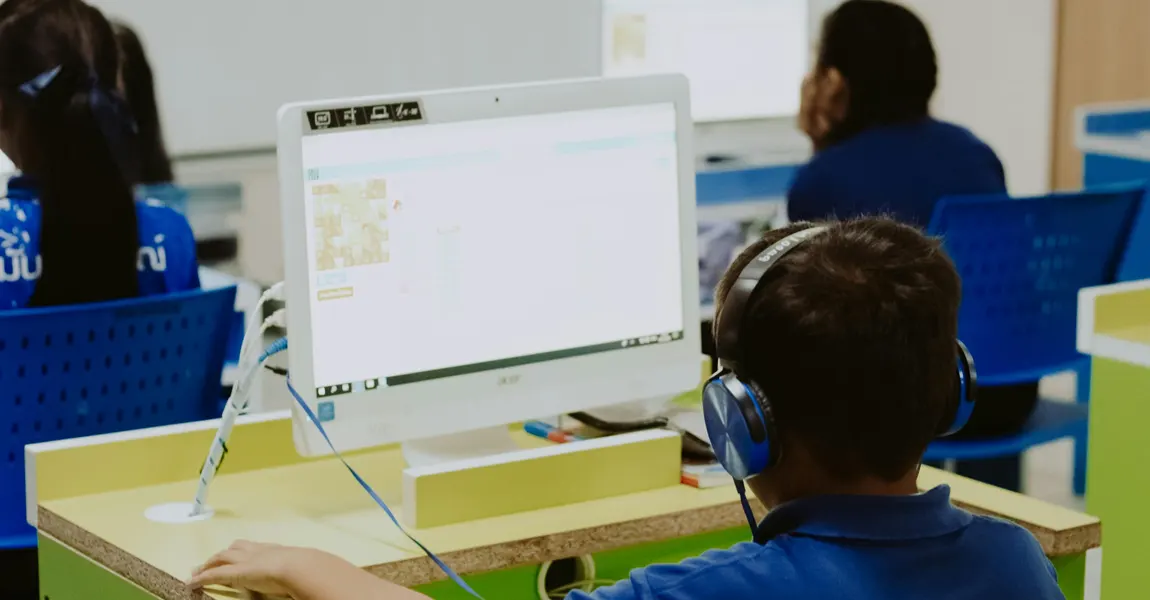
A learning environment that reflects the real world. Robotics, design thinking, filmmaking, outdoor exploration — these are not enrichment programmes. In forward-thinking schools, they are how children learn to think.
Dreamtime Learning Hub: Pune’s First International Micro-School
Each cohort holds a maximum of 10 learners. Not as a marketing promise — as a hard limit built into the school’s operating model. That ratio changes everything: the quality of feedback, the depth of relationship between educator and child, and the pace at which each learner can genuinely move forward.
Most international schools in Pune — however well-regarded — are scaled institutions. The economics of running a large campus require large cohorts, standardised delivery, and systems built for efficiency over individuality.
A micro-school inverts that logic entirely. The system is organised around the child. Academic progress is accelerated — core learning happens in a fraction of traditional school hours — which frees children to go deeper into their own interests, build real-world skills, and develop the self-awareness that drives lifelong learning.
Which board is best for an international school in Pune — IB, IGCSE, or Cambridge? The Cambridge and IGCSE frameworks are widely respected globally and focus on deep conceptual learning rather than rote recall. They suit children who will pursue international higher education or careers that require adaptive thinking. For Pune families with global mobility or global ambitions, IGCSE is increasingly the preferred choice. Dreamtime Learning Hub Pune operates on this framework.
What is the difference between an international school and a micro-school in Pune? A traditional international school is typically a large institution offering an international curriculum. A micro-school like Dreamtime Learning Hub is a small, intentional learning community — capped at 10 learners per cohort — that delivers an international curriculum (IGCSE) within a highly personalised structure. The micro-school model retains the academic rigour of international education while removing the anonymity that large schools cannot avoid.
At what age should my child join an international school in Pune? The earlier a child enters a strong learning environment, the more benefit they receive from it. Dreamtime Learning Hub Pune accepts children from Playgroup (age 2) through to Grade 7. Starting in the foundation years means children build emotional security, curiosity, and foundational skills in an environment specifically designed for how young children actually learn.
Are international schools in Pune worth the investment? The answer depends entirely on what you are investing in. A school that delivers genuine personalisation, small cohorts, an internationally recognised curriculum, and a learning environment that builds both academic capability and emotional intelligence represents a meaningful return — in your child’s confidence, adaptability, and long-term outcomes. A large campus with an international badge and 30 children per room may not.
How do I evaluate whether an international school is right for my child in Pune? Visit the campus. Watch how children move through the space during learning time. Ask the school how it identifies and responds when a child is disengaged. Ask how it supports a child who is ahead of peers in one subject and behind in another. The quality and specificity of the answers will tell you more than the prospectus ever will.
Dreamtime Learning Hub Pune is located at Survey No 202A, Plot No 4B, Kalyani Nagar, Nagar Road, Pune – 411006. Admissions are open for Academic Year 2026–27 from Playgroup to Grade 7. Seats per cohort are strictly limited to 10 learners.
Feature
- Class Size
- Learning Style
- Personalization
- Emotional Support
- Flexibility
- Global Exposure
- Large (25–40)
- Structured, teacher-led
- Limited
- Variable
- Low
- High
- Small (8–15)
- Inquiry-based, learner-led
- High personalization
- Integral to curriculum
- Very high
- High + Real-world application
If you’re searching for a preschool that goes beyond the basics and helps your child thrive in every way, Dreamtime is ready to welcome you.
Admission closing Soon
Share this Articles
Share this Articles
You may also like these articles: